
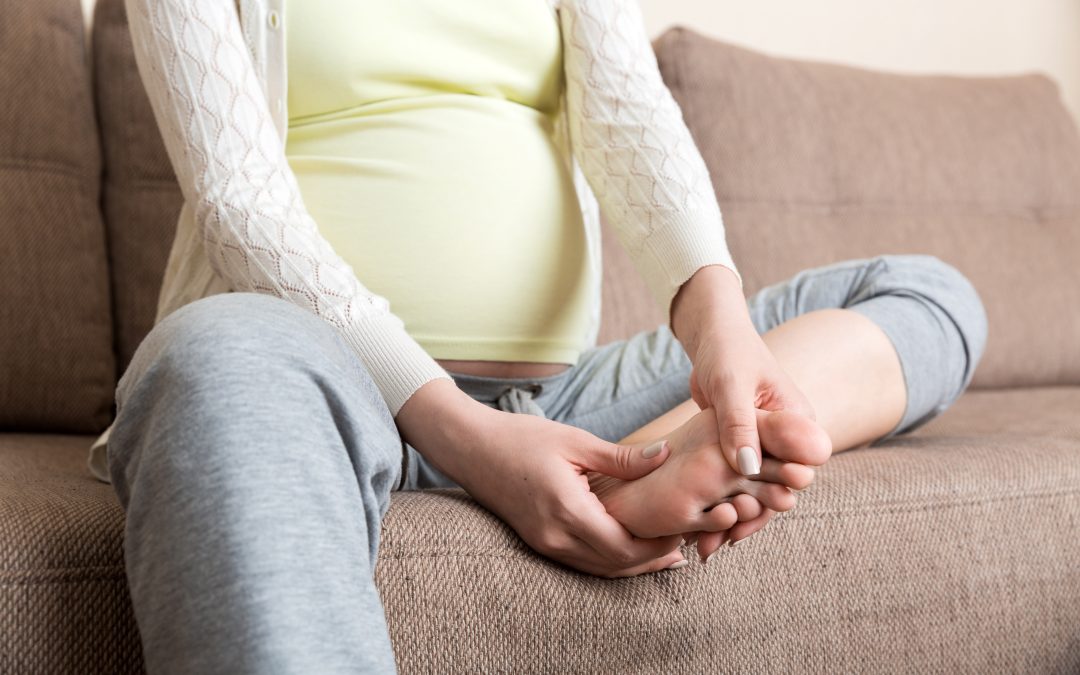
A pregnant body goes through myriad physical changes. We’ll spare you a full description of each one, though suffice to say they are all worthwhile. You may not feel that way while you are pregnant, but you will once you gaze into two perfect little eyes of your own creation.
Pregnant women often experience changes in their feet – unpleasant ones, specifically. These might include:
- Flat Feet – Research has shown that about 60 to 70% of women have wider, flatter feet following pregnancy. The reason for this phenomenon is simple: body weight increases and is distributed differently during pregnancy, which forces the feet to acclimate in response.
- Swelling – Increased estrogen and aldosterone levels cause the kidneys to retain more fluid during pregnancy. The result? Blood volume increases by as much as 50%. Gravity forces this extra blood to accumulate in the feet and ankles, which is one of several reasons why most pregnant women experience swelling there.
- Plantar Fasciitis – Weight gain and other hormonal factors cause around one in ten pregnant women to have plantar fasciitis. This condition often manifests itself as pain and swelling in one or both arches of the feet. In extreme cases, it can make walking almost unbearable.
Foot Care Tips for Pregnancy
Unfortunately, pregnancy and discomfort must go hand in hand for many mothers-to-be. But so long as you take proper care of your feet, you may find yourself in less pain and better able to walk and stand for extended periods of time.
- Wear comfortable shoes. All that extra weight places a lot of pressure on your foot arches. That makes a proper pair of shoes with good arch support essential during pregnancy: no sandals or flip-flops. The ideal shoes would also permit free blood circulation, which makes tight straps and other constrictive elements a big no-no.
- Wear orthotics. Are your most supportive shoes still not supportive enough? Ask your GP, obstetrician or podiatrist whether orthotic inserts could help. In many cases, a set of over-the-counter shoe inserts are enough to provide significant relief.
- Elevate and massage feet. Increased blood volume isn’t the only reason why feet swell Extra water weight and pressure caused by uterine growth both play their parts as well. Fortunately, elevating your feet for 15 to 20 minutes, three to four times a day is often sufficient to substantially reduce foot swelling. Foot massage helps as well – the reason why so many fathers have mastered it by the time of their first child’s arrival.
- Exercise. So long as it elevates your heart rate, any kind of physical exercise is due to improve your circulation – and reduce swelling in your feet and around your ankles as a result. Not keen on exercise? No worries! So long as you get active for at least 30 minutes a day, five days a week, you’ll be well ahead of the curve.
- Keep hydrated. Perhaps counterintuitively, drinking plenty of water actually reduces This is partly because hydration helps the body combat inflammation, and also because soft tissues expand in size when they are dehydrated.
- Moisturize. Complex hormonal changes are responsible for drying and cracking the skin around the feet during pregnancy. This problem is worst for the heels, as they support most of the body’s weight. Fortunately, your favorite over-the-counter moisturizer can easily restore moisture and elasticity to your feet.
- Trim toenails. Hormonal changes and weight gain can both increase a pregnant woman’s risk of getting an ingrown toenail as well. Fortunately, you can avoid this problem altogether by cutting your toenails short, straight across, and slightly rounded at the tips.
Self-care for your feet during pregnancy can help reduce discomfort and prevent several problems. But when a foot issue is especially serious, you owe it to yourself to seek professional care.
If you need pregnancy foot care in the Twin Cities, then Twin Cities Foot & Ankle Clinic is at your side. Contact us today to schedule a consultation at our Golden Valley, MN clinic!